Spider Lily Colors & Meanings: Red, White, Pink, Yellow (and What You’re Actually Looking At)
Published on March 23, 2026By SusycidIf you’ve ever searched “Spider Lily Colors & Meanings” and left more confused than when you started… you’re not imagining it.
The problem is simple: “spider lily” isn’t one flower. It’s a nickname that gets used for a few different plants that happen to share that dramatic, spidery look. And the fastest way people accidentally mix them up is… color.
So one site might be talking about a Japanese red spider lily, another might be talking about a tropical white spider lily, and both will confidently call it “spider lily” like that clears everything up.
The Key Thing to Understand
Before you assign a “meaning” to a spider lily color, you have to ID the spider lily — because color often means it’s a different species (and sometimes a different genus).
Quick reality check
- Red spider lily = usually Lycoris radiata (Japan: higanbana, tied to Ohigan / autumn equinox customs).
- Yellow spider lily = often Lycoris aurea (different species, different context).
- Pink / pink-blue spider lily = often Lycoris sprengeri (mostly discussed as an ornamental garden plant).
- White spider lily = either a white Lycoris or Hymenocallis (different genus, same nickname).
That’s why in this post, we’re not doing the lazy “Red = X, White = Y” chart.
We’re doing it the actually-helpful way:
Color → likely plant → where the meaning comes from → what’s tradition vs modern internet vibes.
Spider Lily Colors & Meanings: Red, White, Pink, and Yellow
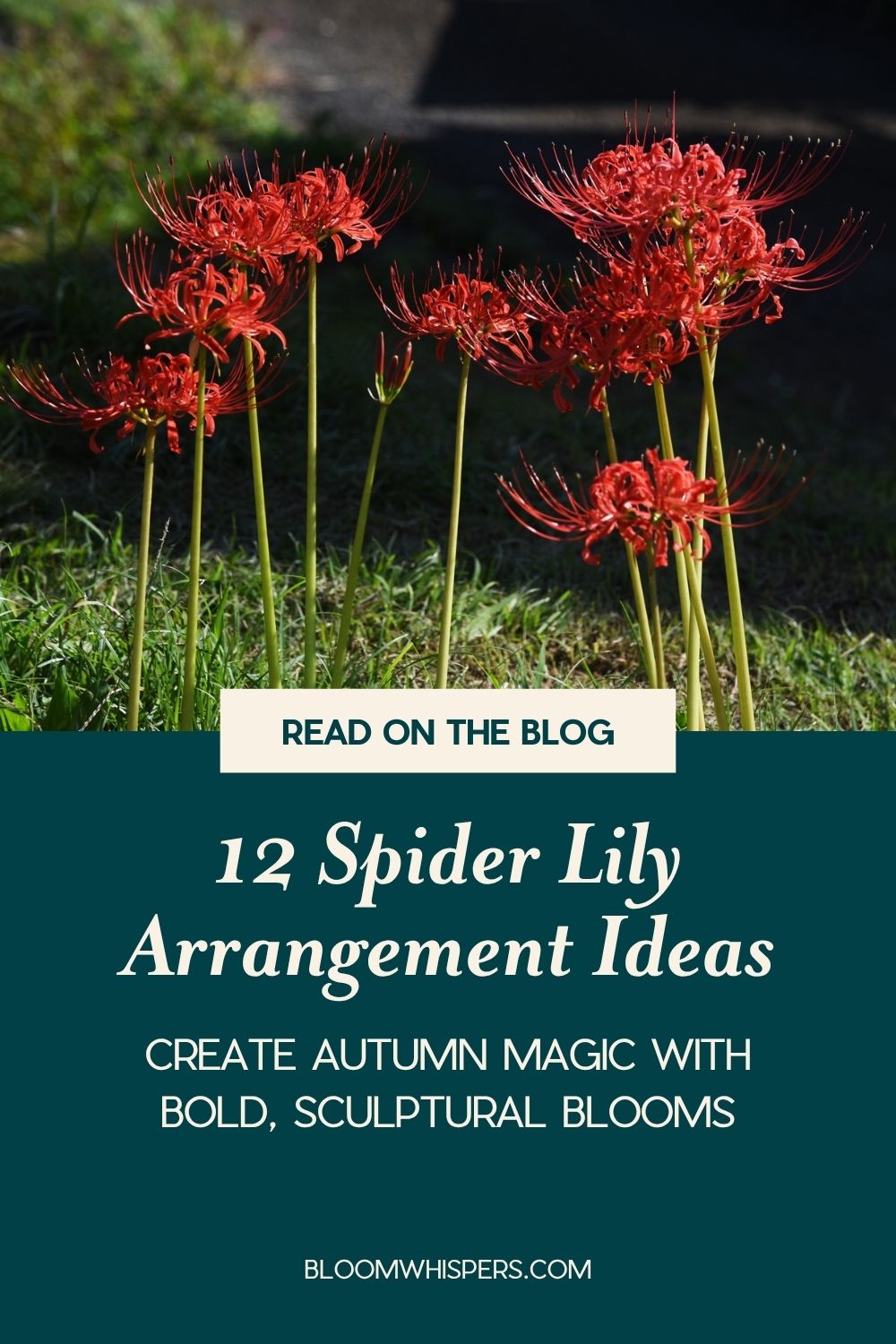
Red spider lily (usually Lycoris radiata)
If someone says “spider lily” and you picture that intense red, this is usually the one they mean.
In Japan, red spider lily is commonly called higanbana, and the reason it carries so much symbolism is timing: it tends to bloom around Ohigan, the equinox period that’s connected with reflection and visiting graves. That’s why you’ll see it described as a threshold flower — not because the petals are “magic,” but because it reliably appears during a week that already has meaning.
How to talk about the “meaning” without overclaiming:
- Safe to say: often associated with the autumn equinox / Ohigan season and themes of remembrance.
- Not safe to say: “it universally means death” (that’s an oversimplification).
Garden note: This one is also the reason red spider lilies get a reputation for showing up “out of nowhere” — in many Lycoris, flowers and leaves show up in different seasons, so the bloom can look sudden if you weren’t watching the bulb earlier.

White spider lily (the most confusing one)
White spider lily is where the internet gets messy fast, because two completely different plants can get called this:
- White/cream Lycoris (sometimes called white spider lily in catalogs), or
- Hymenocallis (the tropical-looking, starry white “beach spider lily”)
So the “meaning” depends on what you actually have.
If it’s a white Lycoris:
People often borrow the same style of symbolism language used for other “spider lilies,” but culturally it’s not as cleanly anchored as Japan’s red higanbana story. This is where modern color-meaning lists tend to drift into mood-board territory.
If it’s Hymenocallis:
You’re in a totally different lane — different plant, different growing vibe, different cultural references.
How to stay honest in your writing:
- Safe to say: white spider lily can refer to different plants; meanings vary by context.
- If you want a meaning statement: label it as modern association unless you’re tying it to a specific tradition.
Pink / pink-blue spider lily (often Lycoris sprengeri or hybrids)
These are the “wait… spider lilies can be THAT color?” ones.
Most of the time, pink (or pink with cool-toned tips) spider lilies show up in gardening contexts as ornamental varieties — meaning they’re discussed more for beauty, rarity, and landscape impact than for a single, widely shared cultural symbol.
Meaning-wise:
This is where it makes sense to frame it like Bloom Whispers:
- modern associations: softness, gentleness, romance, “dreamy autumn.”
- rather than claiming an old traditional meaning that might not exist purely.
👉 If you love flowers with deep symbolism, you might also enjoy this post on the meaning of the lotus flower.
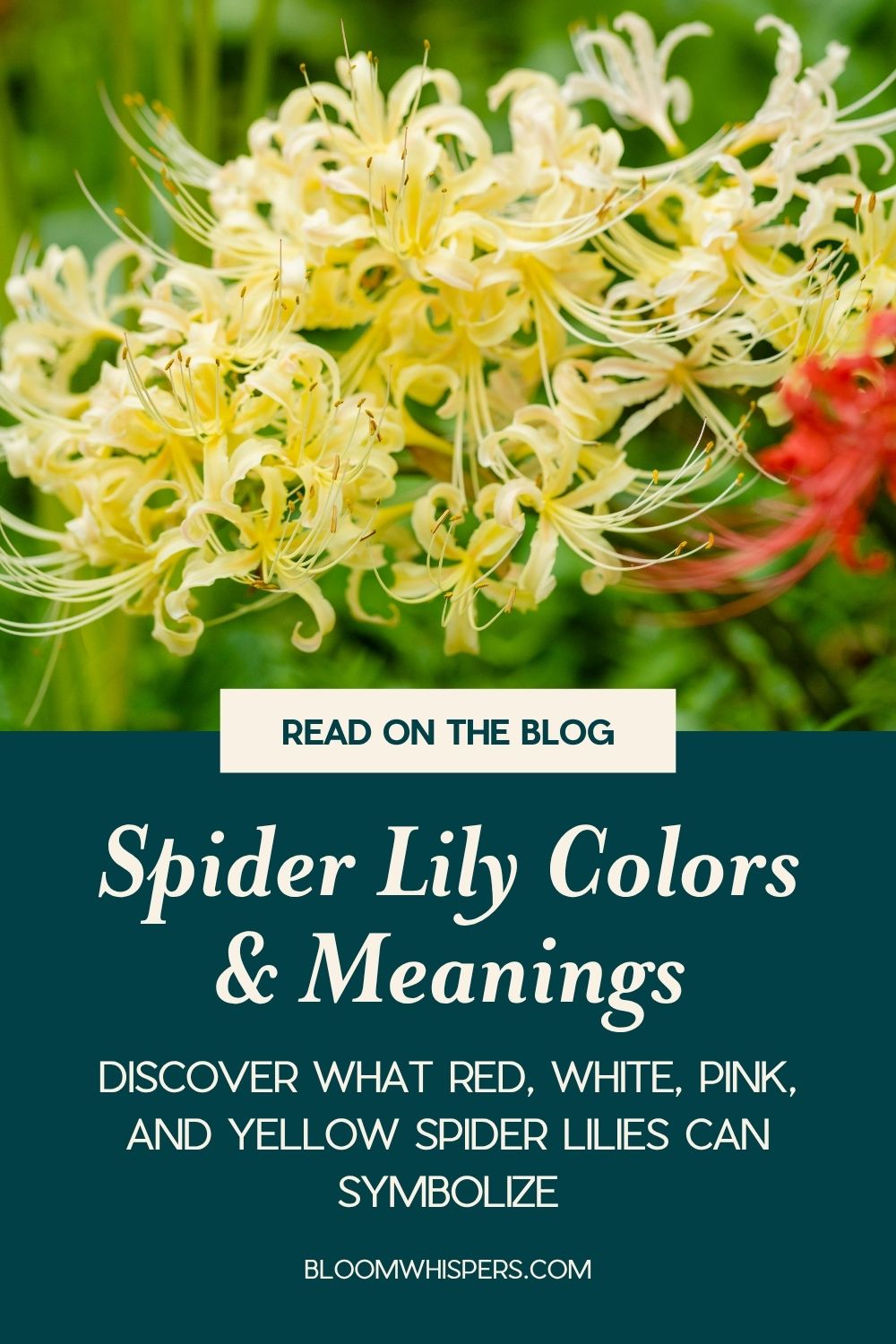
Yellow / golden spider lily (often Lycoris aurea)
Yellow spider lilies are usually a different Lycoris species than the classic red. They still have that spidery silhouette, but they don’t automatically inherit the full higanbana/Ohigan symbolism package.
Meaning-wise:
Treat yellow meanings as context-dependent unless you’re tying them to a specific cultural tradition. (A lot of online lists will give yellow the usual “friendship/joy” color-language, but that’s generally modern and broad.)
Garden note:
Yellow Lycoris tends to read more “sunlit late-season drama” than “equinox omen,” so the vibe people attach to it is often completely different.
Spider Lily Color | Spider Lily Name | Quick ID | Most Common Context | Safe Meaning Wording |
|---|---|---|---|---|
Red spider lily | Lycoris radiata | Blooms on a tall stem with no leaves nearby | Japan / higanbana + gardens | |
White spider lily | White Lycoris or Hymenocallis | Tropical “beachy” look often = Hymenocallis | Gardening sites mix both | |
Pink spider lily | Lycoris sprengeri (or hybrid) | Soft pink, sometimes cool-toned tips | Ornamental bulbs / gardens | |
Yellow spider lily | Lycoris aurea (or similar) | Golden/yellow “spider burst” | Ornamental bulbs / gardens |
So here’s the honest version of “spider lily meanings”:
Color doesn’t just change the vibe — it often changes the plant.
If you’re reading a meaning that mentions Ohigan, the autumn equinox, or “the other shore,” that’s usually pointing to the red spider lily (Lycoris radiata) in Japan. Everything else — white, pink, yellow — tends to be more garden-ornamental context or modern color symbolism, unless you’re tying it to a specific tradition.
The one takeaway (again, because it matters)
ID first. Meaning second. That’s how you write about spider lily colors without accidentally mixing flowers (or inventing folklore).


- References:
Lycoris radiata — Missouri Botanical Garden
https://www.missouribotanicalgarden.org/PlantFinder/PlantFinderDetails.aspx?kempercode=c535 - Lycoris aurea — NC State Extension
https://plants.ces.ncsu.edu/plants/lycoris-aurea/ - Hymenocallis — Plants of the World Online (Kew)
https://powo.science.kew.org/taxon/urn:lsid:ipni.org:names:125573-2

I’m Susy, a Pinterest strategist helping content creators and specialty brands build long-term traffic and sales — without burning out.
Learn more