Higanbana in Japan: Red Spider Lily Symbolism, Ohigan Traditions, and Autumn Bloom Magic
Published on March 19, 2026By SusycidRed spider lily symbolism in Japan is deeply tied to the flower’s timing, its connection to Ohigan, and the reflective mood of the autumn equinox.
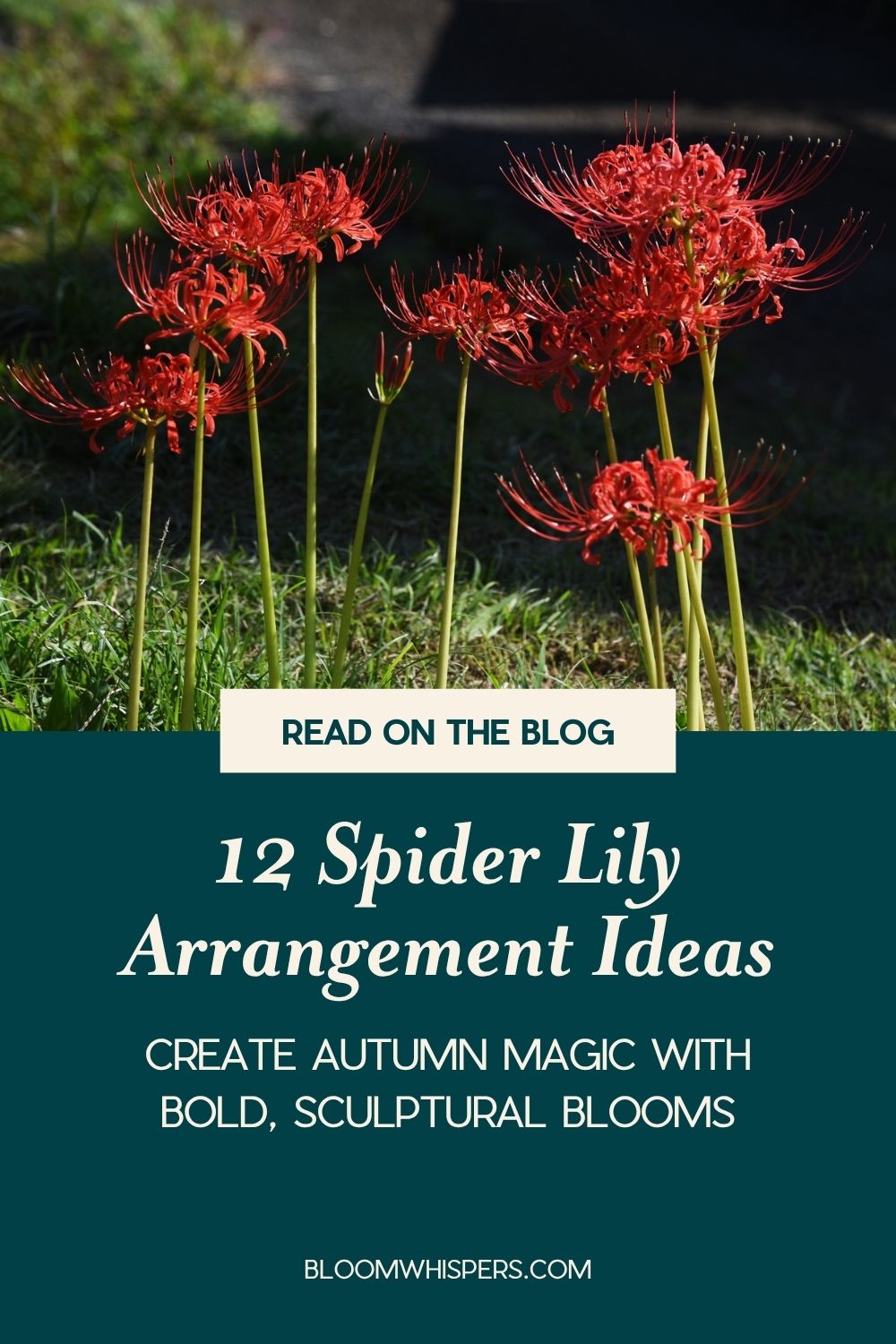
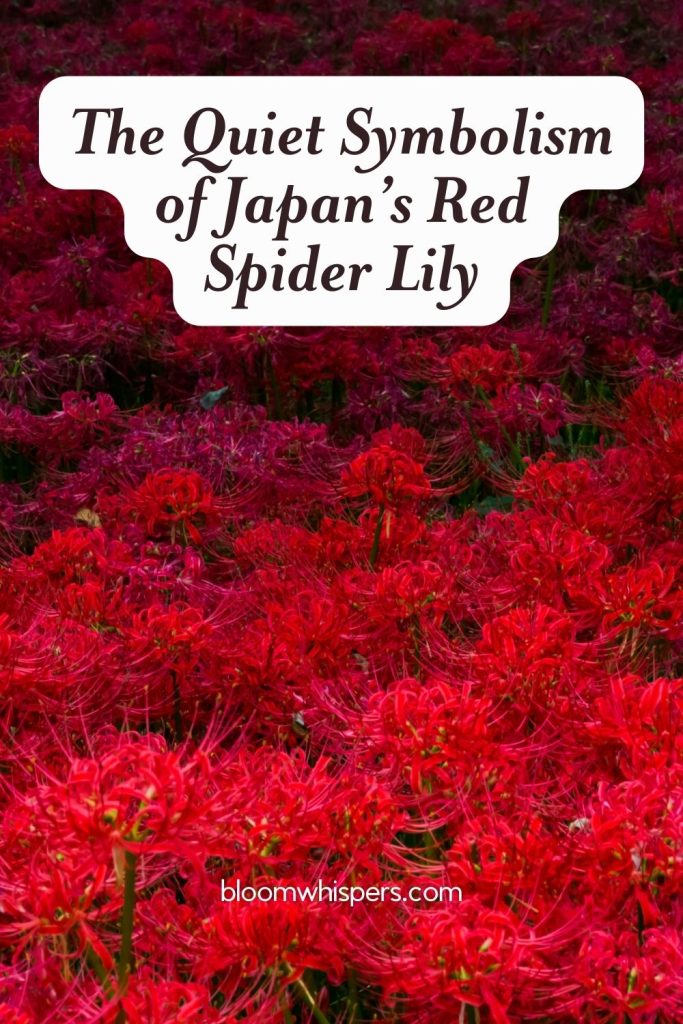
The first reason people find it so strange is simple: it blooms with no leaves around it. Just a tall stem, a burst of crimson, and that unmistakable “spider” shape. The leaves come later, in a different season, which is why gardeners sometimes know it by nicknames like surprise lily or naked ladies.
It’s the red spider lily — and the first reason people find it so strange is simple: it blooms with no leaves around it. Just a tall stem, a burst of crimson, and that unmistakable “spider” shape. The leaves come later, in a different season, which is why gardeners sometimes know it by nicknames like surprise lily or naked ladies.
Now here’s where Japan makes it even more interesting.
In Japanese, the red spider lily is most commonly called higanbana. And that name isn’t random — it’s basically pointing at the calendar. This flower tends to bloom around Ohigan, the equinox week in Buddhism. So the name and the timing are linked: higan-bana = “the flower of Higan.”
If you only learn one thing from this post, make it this:
Red spider lily symbolism in Japan isn’t just “because it’s red” or “because it looks spooky.”
It’s because it arrives right around the equinox — during a time culturally associated with reflection, visiting graves, and remembering those who came before.
A few quick things to know about the red spider lily
- Ohigan is observed for seven days around the spring and autumn equinoxes, and the word is often explained as meaning “the other shore.”
- This plant has a very practical side: it’s toxic, and one common explanation for why you see it along field edges is that it helps discourage pests.
- Also, quick vocabulary trap: “spider lily” can mean different plants in different places. When we’re talking about Japan’s higanbana, we mean Lycoris radiata (the red spider lily).
And yes — the red spider lily has plenty of modern pop-culture associations too (manga/anime love it). I’ll only name-drop that here so we can link you to the deeper post later.
Ohigan: the equinox week behind higanbana and red spider lily symbolism in Japan
So… what is Ohigan?
Think of it as a small, meaningful window on the Japanese calendar — a seven-day Buddhist observance centered on the spring and autumn equinoxes. It’s often described as a time for reflection, for tending to your inner life, and for remembering the people who came before you. In everyday practice, that can look like visiting family graves, cleaning them, and paying respects — not in a spooky way, more in a “we still belong to each other” way.
And the word itself carries a whole mood.
Ohigan is commonly explained as “the other shore.” It’s a poetic image: this shore is everyday life, and the other shore is… whatever comes after, whatever lies beyond, whatever you call the place we can’t walk to normally. Some explanations even connect it to the image of a mythic river crossing — a symbolic boundary between worlds.
Here’s why that matters for the red spider lily:
The flower shows up right on cue
The red spider lily tends to bloom right around this equinox period — so people don’t just see it as “an autumn flower.” They see it as a calendar marker. A natural signal that says: we’ve reached that week again.
And when a plant reliably appears during a time that’s already emotionally and spiritually loaded… it starts absorbing the meaning of the moment.
That’s the heart of it.
Not “this flower magically means X.”
More like: the timing trained people to feel something when they saw it.
👉 If you love flowers with deep symbolism, you might also enjoy this post on the meaning of the lotus flower.
A gardener’s way to understand the symbolism
If you’ve ever had a plant that comes back every year at the same moment — first frost, first heat wave, the week the light changes — you get it. The red spider lily is one of those plants. It’s punctual. And Japan gave that punctuality a name: higanbana, the flower that arrives during Higan.
(And yes: this is exactly why it’s such a magnet for storytelling — folklore, modern media, all of it. We’ll keep this post traditional, but later you’ll be able to click through to the pop-culture/literature piece.)
Where you’ll see higanbana (and why), plus the symbolism people attach to it
If you ever visit Japan in early autumn, you’ll notice something kind of consistent: the red spider lily doesn’t usually show up in the “cute cottage garden” spots first.
You’re more likely to spot it along edges — paths, rice fields, embankments, temple grounds, and yes, sometimes near cemeteries.
Why there?
There are two layers to this, and they can both be true at the same time:
1) The practical layer (the gardener logic).
Red spider lily is toxic, and one common explanation is that people planted it along field edges to help discourage pests that would dig or chew where you don’t want them. Not “magical protection” — more like old-school, practical boundary planting.
2) The calendar layer (the cultural logic).
Because it tends to bloom around Ohigan, it ends up being seen during a time when many families are already visiting graves and paying respects. So even if no one explained a single thing to you, your brain would start connecting the dots: this flower shows up when people are doing remembrance things. That’s how symbolism grows — it’s often repetition + timing.
And once a flower becomes a reliable “marker,” it doesn’t stay neutral for long.
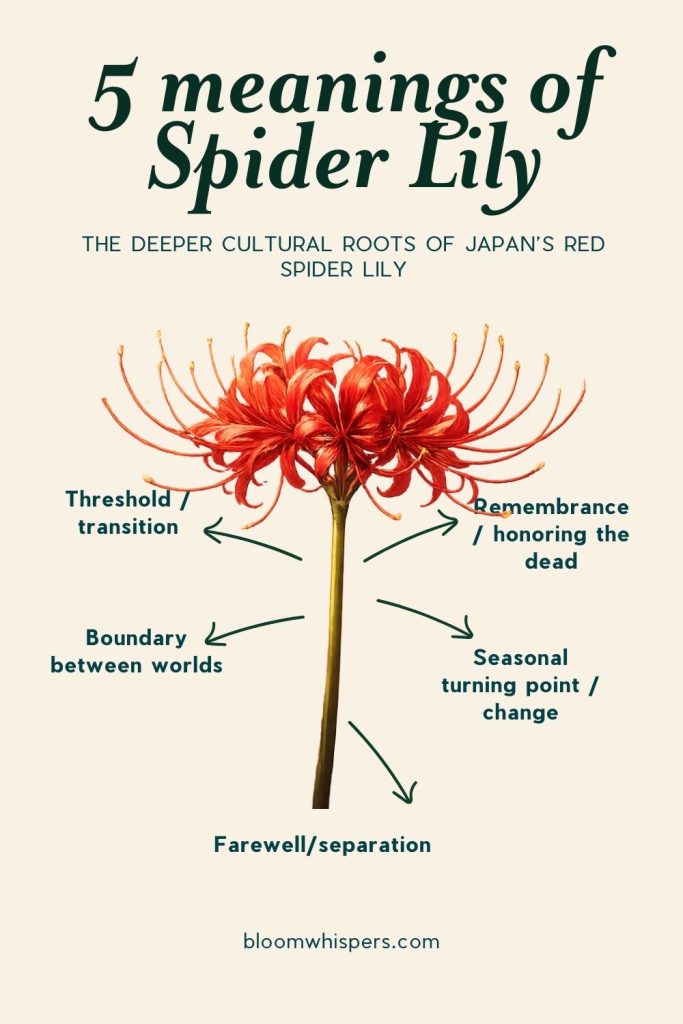
The symbolism threads people commonly link to higanbana
This is the part where we keep it honest and gentle: meanings aren’t universal rules. They’re more like patterns of association. Here are the big ones you’ll see come up again and again:
1) A “threshold” flower
It blooms right when the season flips — and right when Ohigan emphasizes the idea of a crossing or boundary (“the other shore”). So it becomes an easy symbol for in-between spaces:
- summer → autumn
- this world → the other shore
- hello → goodbye
Not in a horror way. More in a quiet “this is a turning point” way.
2) A farewell / separation flower
Because it’s tied to a time of remembrance, it can carry a feeling of parting — the kind that’s more bittersweet than dramatic.
3) A boundary / “don’t bring it inside” vibe
In some tellings, people avoid bringing higanbana into the home — sometimes because of its toxicity, sometimes because it’s associated with funerary spaces, and sometimes because older flower etiquette in Japan can be surprisingly specific about what’s appropriate for celebratory settings. (There’s even old-fashioned superstition around certain reds being linked with “fire” imagery in the home.)
The key is how we phrase it:
Not “Japan believes X.”
But “in some traditions and older customs, it’s treated as a boundary flower rather than a living-room flower.”
So if the red spider lily feels “mystical,” it’s not because it’s trying to be dramatic.
It’s because it shows up at the exact moment the season turns — right around Ohigan, when people are already in that reflective, remembrance space. The timing makes the meaning.
The key takeaway
Red spider lily symbolism in Japan is rooted in the flower’s arrival during Ohigan — the equinox week tied to “the other shore.” It’s a flower that arrives at the threshold, so people learned to read it that way.
And if you want the modern side (how this flower shows up in manga/anime and contemporary storytelling), I’ll link you to that post here next.
Want more gentle flower symbolism like this?

References:
- Lycoris radiata — Missouri Botanical Garden
https://www.missouribotanicalgarden.org/PlantFinder/PlantFinderDetails.aspx?kempercode=c535 - Meaning of Higan — Higashi Honganji USA
https://higashihonganjiusa.org/2018/05/15/meaning-of-higan/ - Special Observances / Ohigan — Berkeley Buddhist Temple
https://www.berkeleybuddhisttemple.org/special-observances

I’m Susy, a Pinterest strategist helping content creators and specialty brands build long-term traffic and sales — without burning out.
Learn more